“I’m an engaged citizen who has a deep love for Zimbabwe. I’m also an Africa development enthusiast, meaning that I’m always curious about how the lot of the common person on the continent can be improved.”
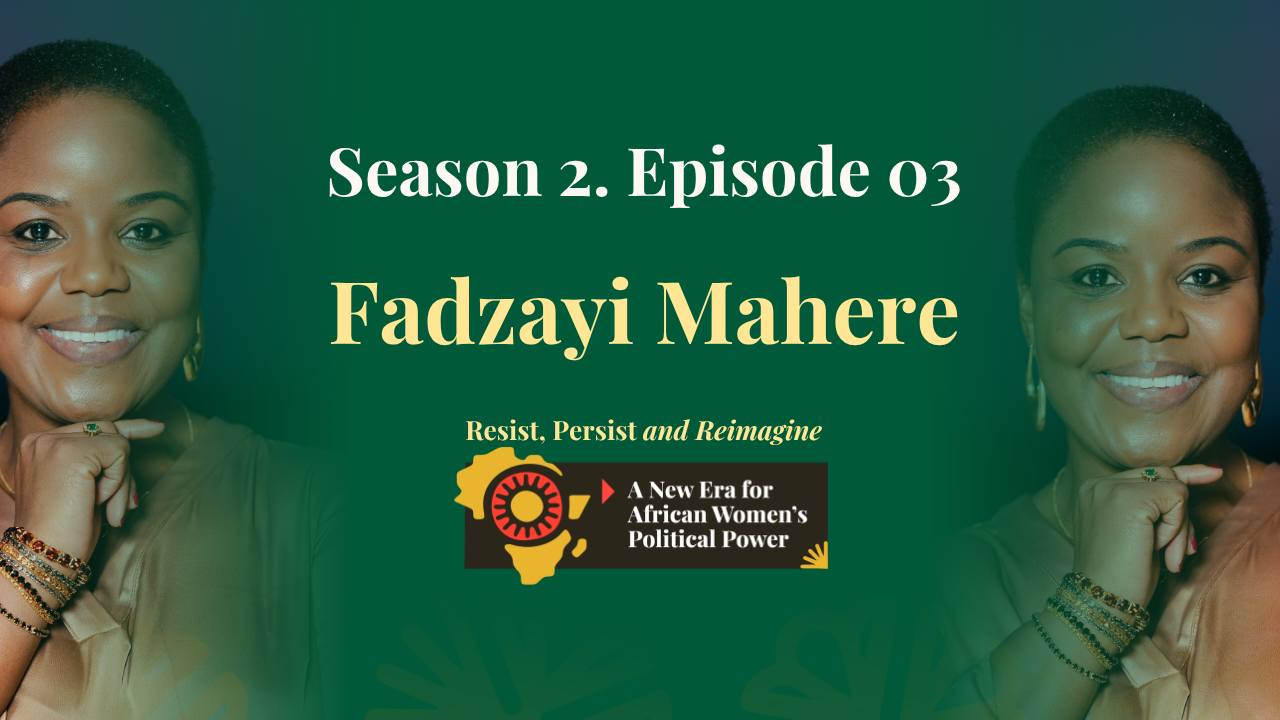
Fadzayi Mahere
Fadzayi Mahere identifies herself first through her love for her country and her professional background. She knew from a very young age that she was meant for the legal profession, “I came out of the womb knowing I’d be a lawyer,” she shares. However, her path into the heart of Zimbabwean politics began much later.
In 2016, while teaching and practicing law, she became deeply frustrated with a government she saw acting “outside the confines of the law” and “unfairly.” This moved her to start writing and debating openly, joining the #ThisFlag movement. Though she didn’t consider herself a “typical politician,” she eventually became a Member of Parliament and a spokesperson for the main opposition party.
State Persecution and Imprisonment
Her political rise led to severe pushback. Fadzayi has been arrested and jailed multiple times, once being sent to a maximum-security prison simply for tweeting against police brutality. She describes being held in terrible conditions alongside convicted criminals, sleeping on cold concrete floors in cells filled with sickness and the smell of urine.
In that cell, she made a life-changing decision: “I remember just waking up one night and saying, ‘because of this, I’m going to speak out. Nobody should ever have to go through this.'” She decided that if the government would go that far to silence her, she would simply “speak more.”
Structural Barriers for Women
Fadzayi highlights that while politics is hard for anyone in a shrinking democracy, “that difficulty is magnified a million times if you’re a woman.” Women face deep barriers rooted in social tradition. In many cultural contexts, women are viewed as “perpetual minors” who are expected to remain silent, cook, clean, and never “speak truth to power to an older man”. Even friends and family often discourage women from politics, mothers may urge their daughters to “just calm down, get married, continue with your neat law work” to live a quiet life.
Beyond cultural pressure, women in politics face extreme physical and mental violence. In prison, a lack of clean running water takes away a woman’s basic dignity, especially during menstruation. Outside of prison, they are targets of online violence and fake stories meant to ruin their reputations. Lies about a woman’s personal life, such as fabricated stories about affairs or pregnancies, are used to ruin their reputations and make the cost of participating in politics feel too high to bear.
Turning Challenges into Opportunities
Despite these obstacles, women are choosing to lead. Fadzayi believes that “for every challenge so-called, there’s a huge opportunity, there’s an opportunity to demonstrate strength” and skill. Because female politicians stand out in spaces dominated by men, they can use that extra attention to change the conversation. Instead of letting people focus on their personal lives, women can “completely shift that conversation into a conversation about where to take the nation,” focusing on the economy, human rights, climate change, and technology.
To keep women in these leadership roles, they need specific help from donors and organizations. Fadzayi notes that the current political system often offers no resources or solidarity to women: “the superstructure just doesn’t give money to you… You’re literally on your own.” To fight against these unfair systems, women need direct funding, help building their public profiles, and training in communication.
A Vision for the “African Dream”
To change the landscape of leadership, Fadzayi believes we must “take away women’s fear and replace it with courage.” This courage allows women to “think outside the box” and fight for an “African dream” based on ubuntu—the idea that we are all connected. She explains that “Ubuntu it’s about the collective. It’s not about individuals serving themselves.” Through their courage, resilience and creativity, women are proving that a society where everyone has food, shelter, and electricity is not just a dream, but a reality worth fighting for.
The Power of the Hive
Courage is easier to find when you know someone has your back. This is the collective strength behind Colmena. We aren’t here to follow the old rules; we are here to dismantle the barriers that have silenced women for generations.
Colmena Fund fuels the power of feminist leaders across the Global South—standing firmly with Indigenous, queer, and disabled leaders at every stage of their journey. Through long-term funding and radical solidarity, we are disrupting the status quo until diverse leadership becomes the standard. Together, we are redefining political power to build a future that is truly democratic, fair, and safe for everyone.
Full conversation with Fadzayi Mahere in Season 2 of Colmena Fund’s podcast Resist, Persist and Reimagine: A New Era for African Women’s Political Power.