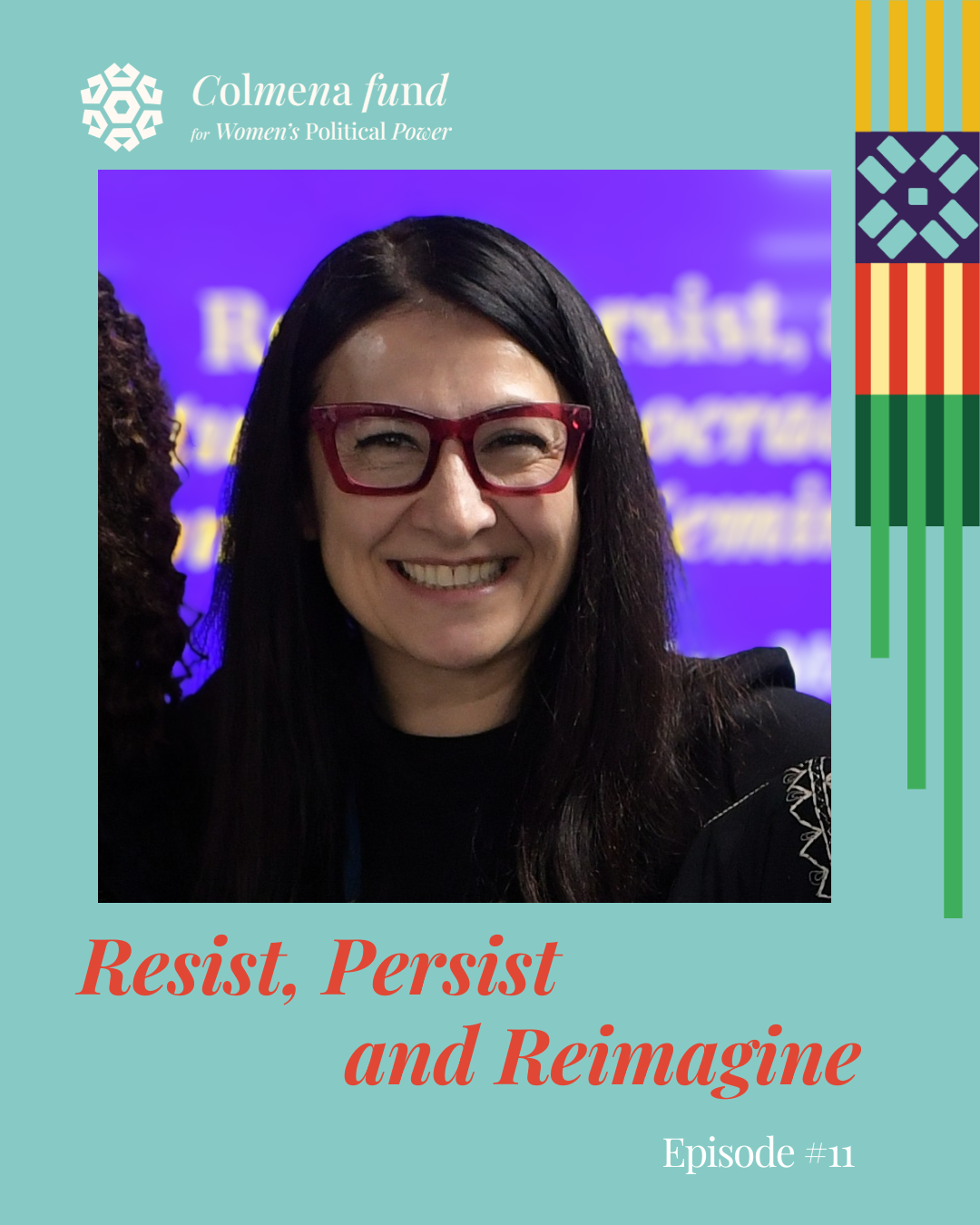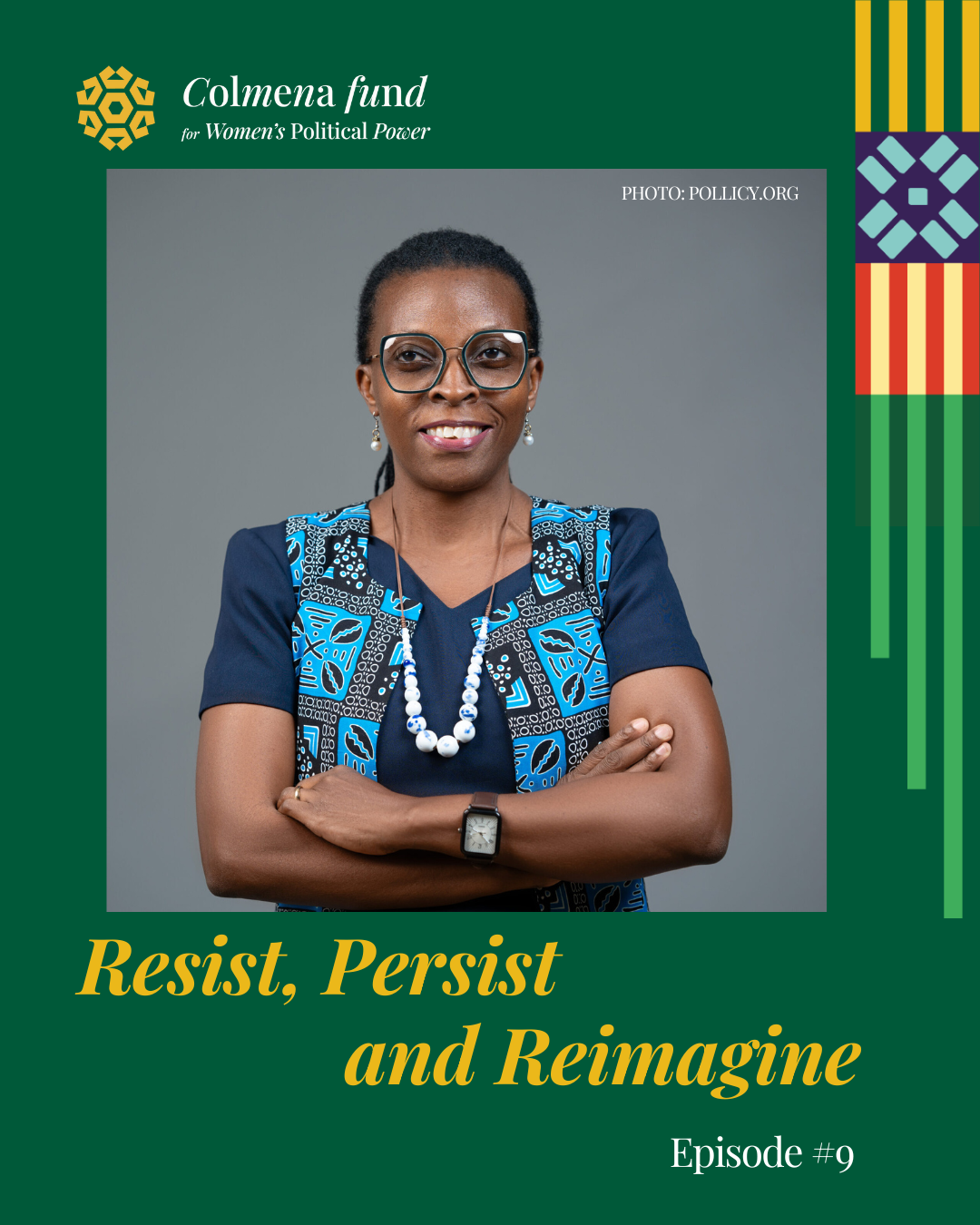
Across the Global South, feminist civil society is confronting a dangerous new frontier: the use of digital platforms against women in public life. In Episode 9 of Resist, Persist and Reimagine, we speak with Bonnita Nyamwire, Research Director at Pollicy, a civic tech organization based in Kampala, Uganda, and a partner of the Colmena Fund.
Bonnita’s work highlights one of the most urgent and overlooked challenges in advancing women’s rights today: technology-facilitated gender-based violence (TFGBV). For women in politics, activism, and media, online abuse is not just a personal attack—it is a political tool used to silence and exclude.
Her insights call us to take seriously the digital frontlines of the women’s rights movement—and to invest in the systems of protection, solidarity, and mentorship that allow women not only to enter politics, but to be protagonists and lead.
The Unlooked Threat: Technology-Facilitated Gender-Based Violence
Bonnita Nyamwire’s research focuses on the growing threat of TFGBV—an issue that disproportionately affects women who hold public roles. Pollicy’s initial study, conducted across Uganda, Kenya, Senegal, Ethiopia, and South Africa, revealed a striking pattern: women are actively using the internet, but many lack the digital literacy to identify or defend themselves against online violence.
Prevalence rates of TFGBV ranged from 28% to 33%, and the issue was particularly acute among women in politics, human rights defenders, media, and activism—roles that require constant public interaction and often challenge patriarchal norms. These women experience “a lot of backlash both online and offline,” especially when advocating for gender equality. Pollicy’s subsequent research focused specifically on these categories in Senegal, Zambia, Uganda, and the Democratic Republic of Congo (DRC).
Beyond Digital: Structural Barriers and Slow Progress
While women’s representation in African parliaments has grown incrementally—reaching 26% in 2024, up just 1% from 2021—progress is far too slow. At this rate, it will take until 2100 to achieve gender parity. Behind this stagnation are deeply entrenched forms of misogyny, traditional gender roles, and the normalization of violence—both online and offline.
Bonnita shared multiple examples of how these dynamics operate. One woman was prohibited by her husband from running for office, told that being seen on TV would mean she was no longer “his wife.” She was forced to campaign offline.
Even those who succeed in contesting elections face isolation once in office. Access to mentorship and peer support is limited, and many women report being “shut down” in male-dominated legislative spaces. Bonnita explains that younger women often fear entering politics at all, having witnessed the backlash experienced by those before them. As women gain visibility, they also become more exposed to harassment, threats, and organized attacks.
This leads to a troubling paradox: as the numbers of women in politics slowly increase, their power, visibility, and ability to influence policy often remain constrained. In Uganda, where gender-based violence affects over 51% of women, Bonnita asks a critical question: “Where are our women in parliament?”
Pollicy’s Role and the Power of Civil Society
In the face of these challenges, civil society organizations like Pollicy are playing a critical role. Through research, capacity-building, and advocacy, Pollicy is equipping women with the tools they need to stay safe, lead confidently, and challenge the systems working against them. Their programs cover digital literacy, online safety, and political mentorship—and have already been implemented in Uganda, Tanzania, and Senegal.
But their reach is limited by resources. As Bonnita explains, even something as basic as providing data bundles for virtual training is often out of budget. The demand for their programs is growing, but without sustained support, many women are left without access to the training and protection they need.
She offers a direct call to action to funders and allies: increase investment in feminist civil society, and ensure that support is based on real collaboration with organizations doing the work on the ground. Strategic funding should focus on long-term mentorship, digital safety, and political empowerment—not just representation targets.
Reclaiming the Meaning of Democracy
For Bonnita, democracy means more than elections. It’s about the freedom to participate—in conversations, in policy-making, and in public discourse—without fear. But across the African continent and beyond, that freedom is far from guaranteed for women and girls. Digital violence, systemic misogyny, and institutional gatekeeping continue to silence too many.
Pollicy’s work reminds us that digital spaces are now central to political life—and that protecting women in these spaces is essential to building inclusive democracies. Representation is not enough. We must ensure that women are protected, supported, and empowered to lead boldly and safely—online and offline.
🔗 Learn more about Pollicy: pollicy.org
🎧 Listen to Episode 9 of Resist, Persist and Reimagine featuring Bonnita Nyamwire.