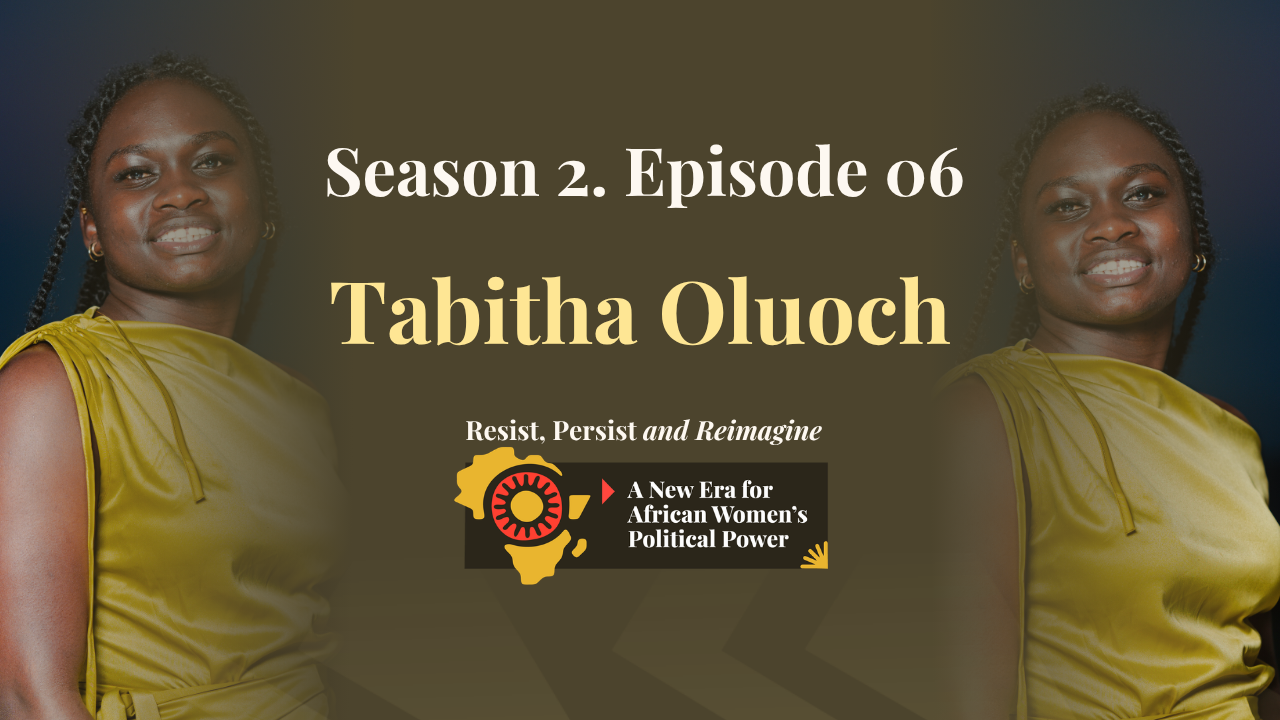
Tabitha Oluoch is dedicated to ensuring that young people—especially women from sidelined communities—are no longer ignored in decision-making spaces. As a Youth Participation Champion at Siasa Place, a youth-led civic tech organization in Kenya, she is working alongside a new generation that is actively claiming its role in politics and leadership.
Recognizing the Power Gap
Tabitha’s path into activism started with a lifelong love for history and current events. However, the real turning point happened at a meeting where a study showed that young women between 18 and 24 were the group most excluded from political participation.
This systemic exclusion sparked a drive for change, especially since laws passed by older generations affect the youth for much longer. She observed that most leaders are between 50 and 80 years old, meaning they won’t live to see the long-term results of their policies.
“If they make a law today in 2025, they might have 20 years to live with that law. But as a 24-year-old, I have about 50 years to live with that same law,” Tabitha explains.
Breaking Down Barriers to Action
Because of this, Tabitha led the “Siasa ID” campaign, recognizing that a national ID card is the first step to being part of a democracy. Working across 17 counties in Kenya, she saw many cultural hurdles that are stopping women from getting involved.
In Kajiado County, she discovered that young women were being told—against the law—that they had to bring a male relative just to get an ID. In coastal areas, she found that women were often used just to get votes, but they were being shut out of the real decisions that affect their health and lives. Tabitha’s work focuses on moving past this tokenism, ensuring women are the primary drivers of the political conversation.
The “Broccoli Effect” and Collective Organizing
To overcome these obstacles, Tabitha and her team use creative strategies to make civic power accessible. She uses the “broccoli effect”—sharing information about how the government works in a way that is relatable and easy for young people to use and share.
By organizing where youth are already active, Siasa Place uses social media to build a collective front: Facebook for community building in rural areas; Instagram for connecting university students; and X (formerly Twitter) for real-time political engagement.
When the Kenya Finance Bill of 2024 was introduced, Tabitha and her peers made the issues local and immediate. Instead of using abstract terms, they analyzed how the bill would impact their daily lives. They showed how the bill would raise the price of sanitary pads and bread, transforming confusing policy into a clear call for collective action.
A New Vision for Democracy
Tabitha’s main goal is to change what it means to participate in a democracy. She argues that for too long, young women have only been seen as useful on election day to help with campaigns and cast votes.
“For me, reimagining democracy means that we are part of the process,” she says.
In this vision, democracy belongs to those who stay involved before, during, and after elections. It’s about young people taking the lead to study laws, joining public meetings, and having a direct say in their own futures. Even when faced with challenges, she sees the power in young people standing up for one another and organizing their own movements on platforms like TikTok.
The Future is Today
For any young woman—from Sudan to Madagascar to Syria—ready to take her place in politics, Tabitha’s message is a call to act now.
“We are always told that young people are the leaders of the future. I think the future is today because there is no day called tomorrow… In Kenya we say ‘kama si sasa, ni sasa hivi‘—if it’s not now, it’s right now. We have to participate right now. We have to stand up because no one is going to speak for us. No one understands our challenges like we do. It takes us to speak for us.”
Listen to the full conversation with Tabitha Oluoch in Episode 06, Season 2 of Colmena Fund’s podcast Resist, Persist and Reimagine: A New Era for African Women’s Political Power.