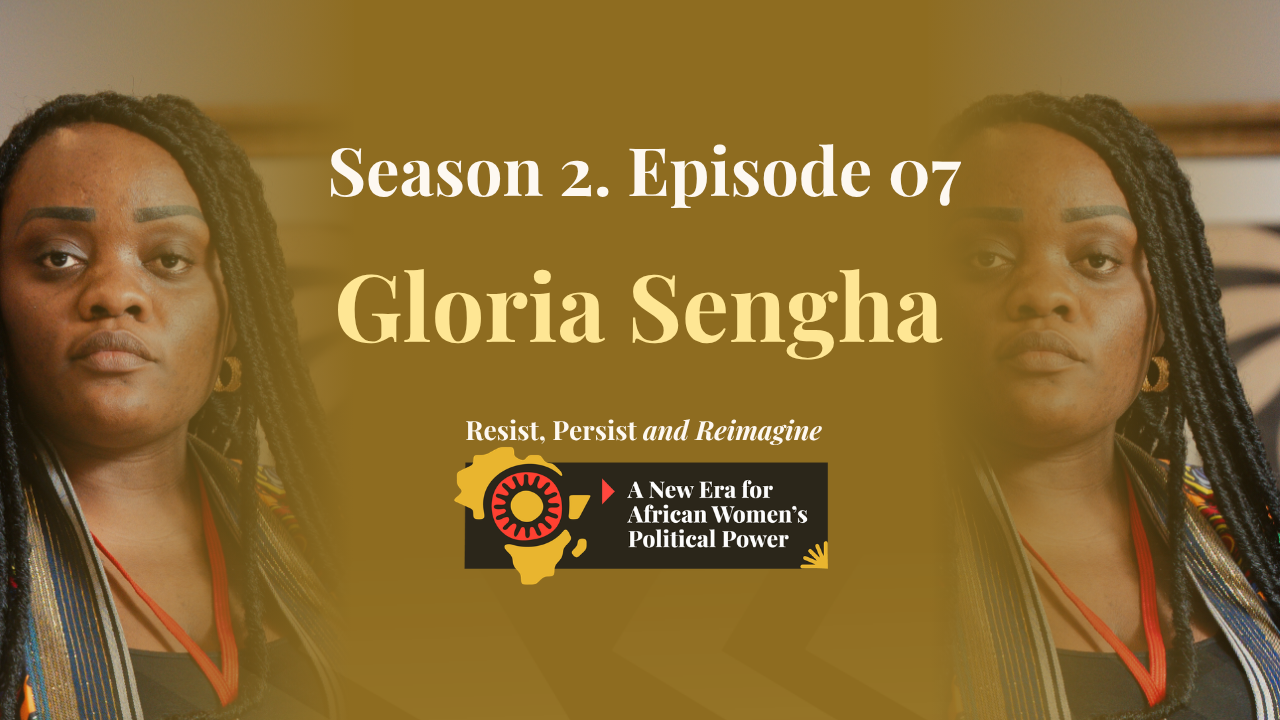
Gloria Sengha is a lawyer and human rights activist in the Democratic Republic of Congo who has dedicated her life to defending freedom. Her journey into activism began as a teenager; while others pursued typical hobbies, she spent her time reading and watching television, fascinated by stories of dictatorships and how countries transition to democracy. Watching the 2011 Arab Spring unfold, she began to wonder how collective action could transform a society.
Confronting an Unfair Reality
Growing up, Sengha was often told she lived in a blessed country full of natural wealth and minerals. But what she saw was a completely different reality. She noticed that a very small privileged group of people enjoyed all the country’s wealth, while everyday citizens were forced to live in extreme poverty.
“But Congolese wealth, the wealth that was praised to us so much, is not translated into the reality of the populations. This wealth is not translated into infrastructure [nor] into public services. On the other hand, you can see the Congolese wealth through certain people, a small group of people.”
“This structural imbalance really started to revolt me,” she explains. Seeing her people accept this suffering as a normal part of life, she knew she had to take a stand:
“I decided to get involved. I said: ‘I am committing myself so that social injustice stops and so that all the people benefit from the national wealth’.”
Breaking Barriers for Women
As she fought for change, Sengha noticed that women, especially those from marginalized backgrounds, faced massive hurdles when trying to enter politics. Because a small, wealthy group controls the resources, “doing politics or participating in politics is a matter for the rich.” On top of that, society teaches girls from a young age that “politics is reserved for men and that a woman’s place is in the kitchen.”
When women do try to speak out, they face a double burden: they must survive an oppressive government where “freedom of expression is a crime,” while also facing a society that harshly judges them for breaking traditional gender roles.
To overcome these barriers, Sengha takes a deeply personal and supportive approach. First, she focuses on raising awareness. She argues that “no woman should be defined by her condition as a woman,” helping others unlearn the false narratives that society has told them about their limitations. By creating safe spaces for women to express themselves freely and using social media to get around government censorship, she spreads a powerful message: “men are not really superior to you, and men are really not beings with whom you are in competition.”
Sengha stands for an equal society where everyone enjoys the same rights. Even though she faces daily online harassment and has been arrested, she refuses to quit. She encourages other women by emphasizing their shared strength: “I too am a woman like you, but I do not step back.”
A Practical Vision for Democracy
This commitment comes at a high personal cost, including intimidation and death threats. But she keeps going because she is fighting alongside the women who lack basic needs like water and electricity while their leaders live in luxury. She views these challenges with a grounded mindset, noting, “I know that change is not a sudden event, change is a process.” To her, facing imprisonment is a stage and a natural part of challenging an unfair system.
Looking ahead, Sengha dreams of a practical democracy where leaders actually respect human rights and keep their promises to the people. In her vision of the future, everyday people are actively involved in shaping their country.
“Democracy must be lived. In democracy. the population, the citizens, participate. Citizens are not only spectators, they are not only babies waiting for milk from their mothers. In democracy, citizens are also actors.”
Listen to the full conversation with Gloria Sengha in Episode 07, Season 2 of Colmena Fund’s podcast Resist, Persist and Reimagine: A New Era for African Women’s Political Power.