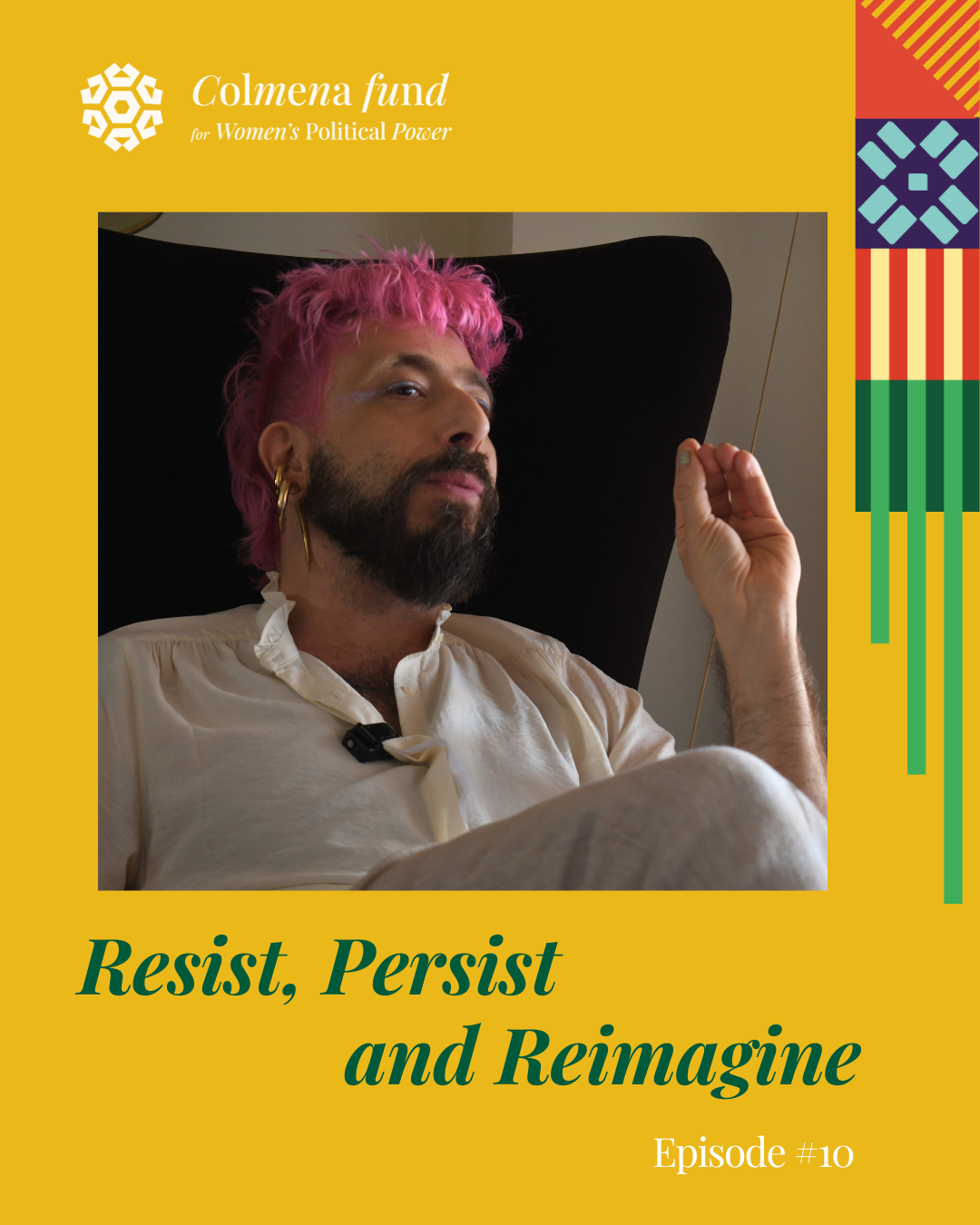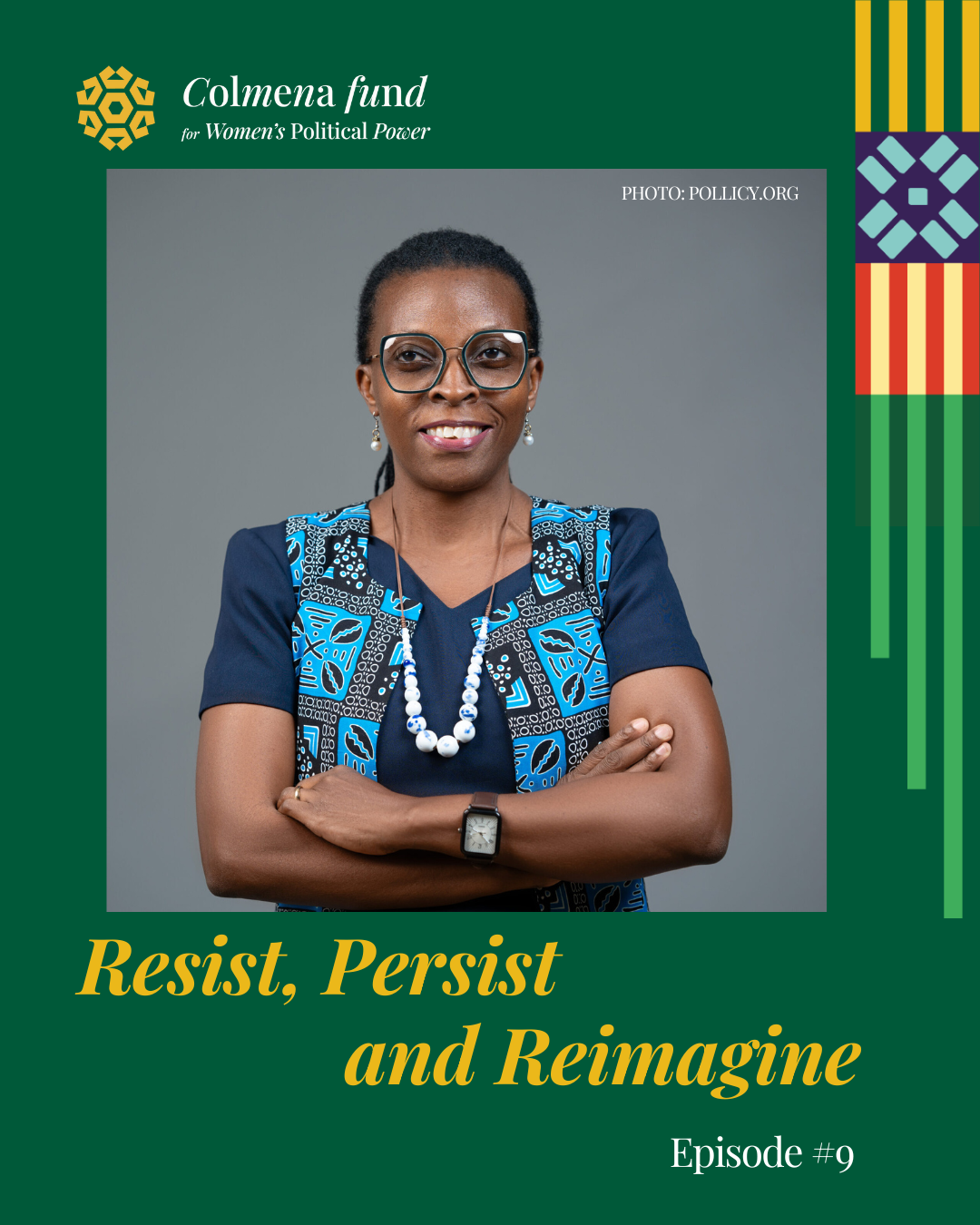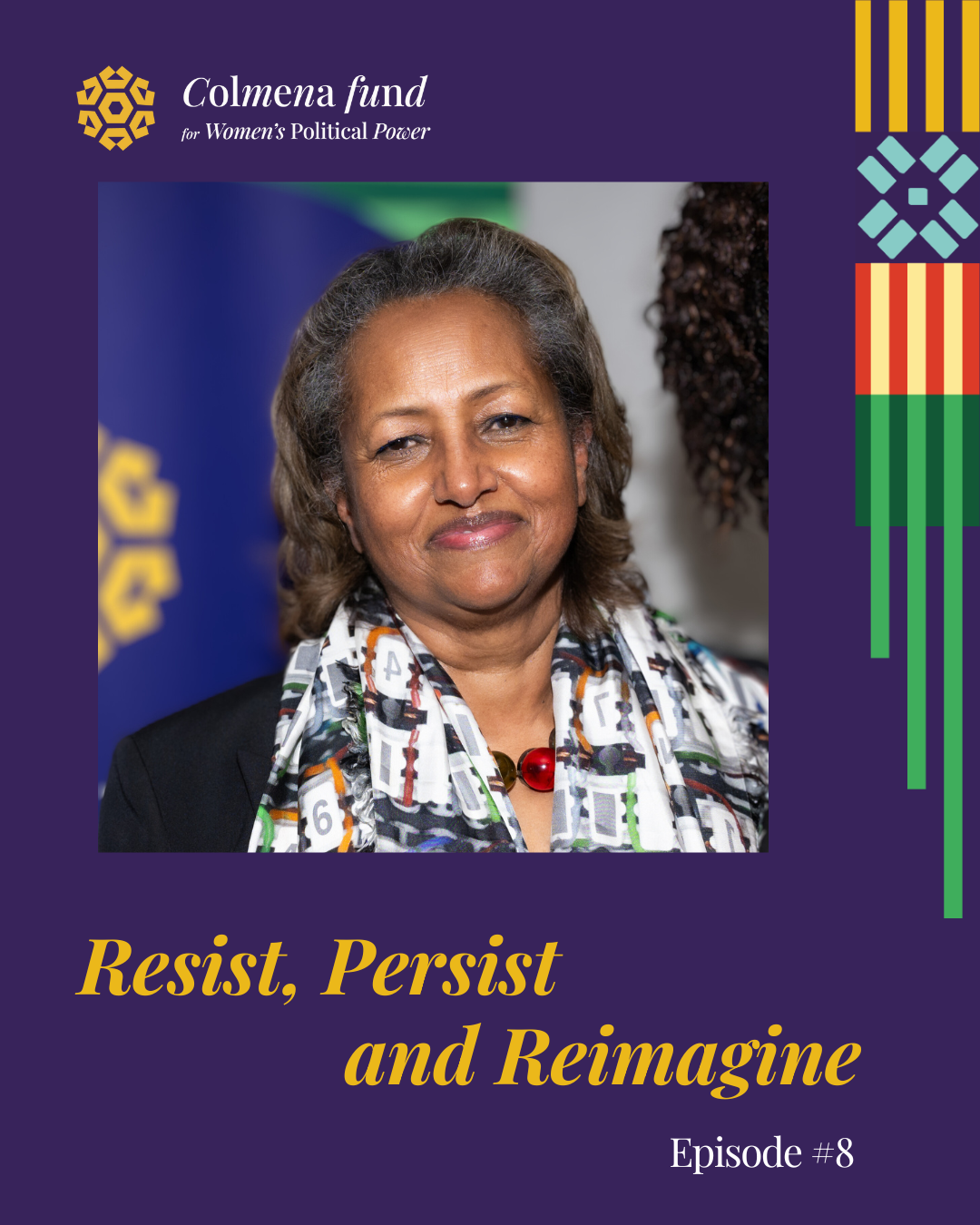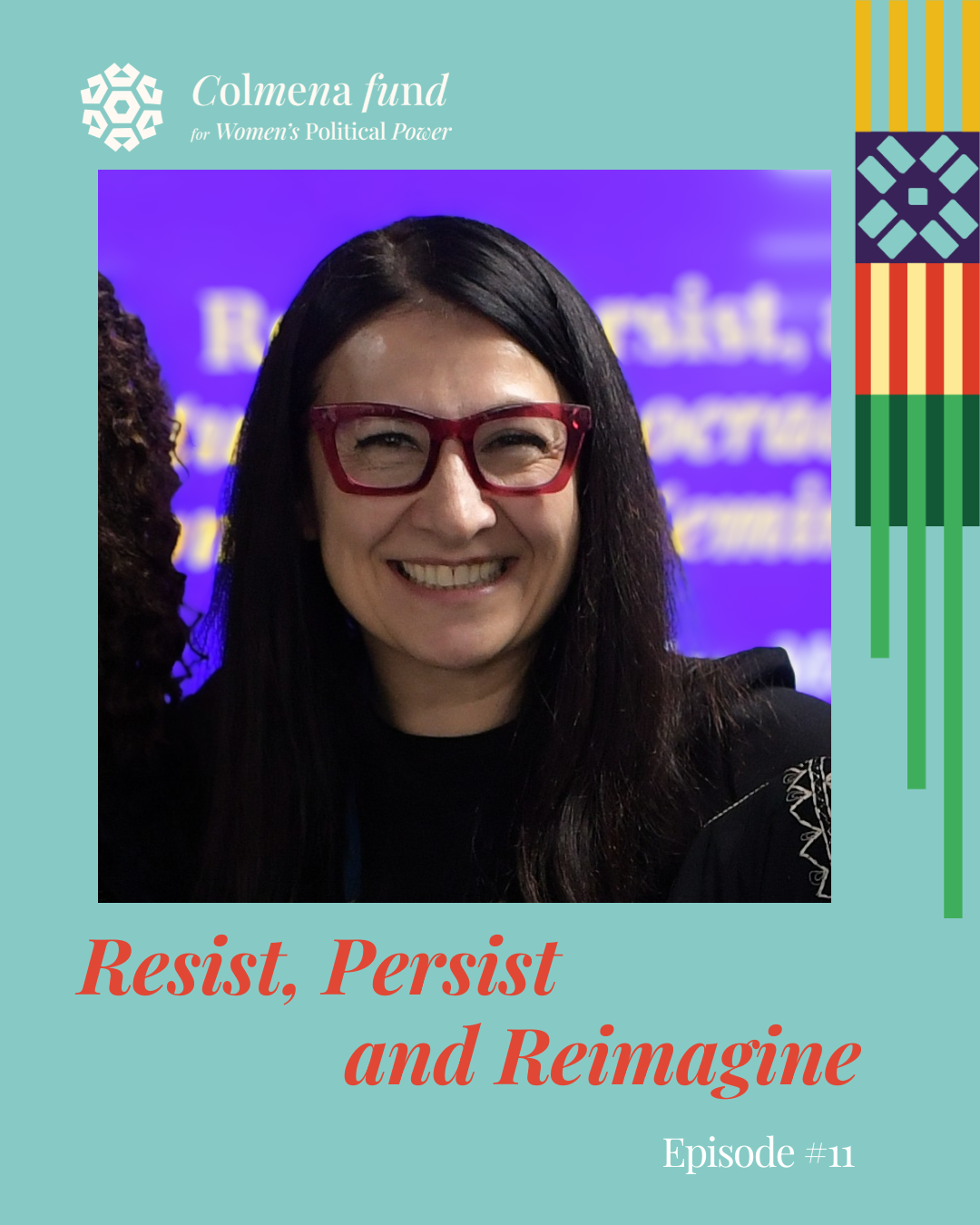
In a powerful conversation on Episode 10 of Resist, Persist and Reimagine, the Colmena Fund podcast, we hear from Mariam Jalabi, an activist, revolutionary, and co-founder of the Syrian Women’s Political Movement. Her insights offer a compelling vision for a more inclusive and just future, particularly highlighting the transformative power of women’s political leadership from the Global South.
Jalabi’s political roots run deep. Raised in a family that resisted the Assad regime in Syria, she grew up with a sense of duty to collective action. That legacy became the foundation for the Syrian Women’s Political Movement, launched to ensure that women —and all those traditionally pushed to the margins— have a seat in Syria’s political future.
“The whole of us when we’re working together in solidarity is so much more powerful than the sum of our parts,” she says. For Jalabi, this isn’t just a belief: it’s a political strategy. She sees in women a unique power to build unity across differences and to imagine systems that serve the majority rather than entrench the privilege of the few.
Despite decades of activism and international frameworks like the Beijing Platform for Action, Jalabi is clear: women’s presence in politics is still limited and often symbolic.
“We women are, in some places sometimes, physically present but we are not strategically present in those spaces. And that is the biggest challenge.”
She emphasizes that representation isn’t enough. What’s needed is strategic presence: women in positions where they can shape agendas, set priorities, and make real decisions that change lives.
The Syrian Women’s Political Movement has taken a bold stance: political participation is not optional. It’s essential. And more than that, it must be done collectively. “More of us doing this kind of political work is so much more important when we also create a network of other political leaders in the region.”
From Syria to Iceland, Jalabi and her peers are exchanging lessons and strategies through initiatives like Women Decide. And they are not just absorbing knowledge, they’re contributing with it. Coming from a country shaped by war and repression, they bring vital insight into how societies can function during conflict and how to protect rights even when institutions collapse.
Jalabi challenges the international community to rethink who holds knowledge and, more specifically, where power should be centered. For too long, women from the Global South have been excluded from the spaces where funding, policy, and influence are decided, often due to barriers as basic as visa restrictions.
“Women who are on the ground are the ones who know how to actually service their communities,” she argues. The solution? Move the conversation. Decenter the West. And create more inclusive, localized spaces of power.
“We need to start rethinking —imagining— a new world order… to shift the center from Western centralized power to something that is closer to the people.”
A central theme in Jalabi’s advocacy is trust. For philanthropy to be effective, it must begin by listening. Those doing the work on the ground know best what’s needed. The role of funders, she says, is not to dictate but to support.
“What is it that they need? How do they need the support? Where do they need the funding to go?”
That support can take many forms, but it must be flexible, responsive, and grounded in a commitment to long-term change.
At its core, Jalabi’s vision is one of political transformation. Democracy, as it stands, is not enough. It must be reimagined to serve more people, more equitably and women, she insists, are key to that process.
“We need to reimagine how to become a true participatory democracy,” she says, “and to put the right people in the right spaces.”
With women holding only about 26% of global decision-making positions —and even fewer reaching real parity— there is a long road ahead. But Jalabi is firm: increasing women’s leadership is no longer aspirational. “It’s no longer a luxury. It’s a necessity, especially now in 2025.”
In one of the episode’s most powerful moments, Jalabi shares a story that speaks volumes about courage and determination. After giving birth by a C-section, a woman from Raqqa traveled for two days —newborn in tow— to attend a political conference in Damascus following the fall of the regime. She named her baby Salam: peace.
It is stories like these that drive Jalabi’s hope for Syria’s future. Despite the violence and instability, she believes there is a window, an opportunity, to build something new. A political system rooted in human rights, international law, and in dignity for all.
“People are sick of the war, sick of the killing,” she says. “They want to create a new space, a new way of governing… in service of all of the people.”
Mariam Jalabi’s story is a vivid reminder of what happens when women lead, not just in name, but in practice. From the heart of Syria’s conflict to the broader fight for global justice, her voice calls us to build differently, lead collectively, and reimagine what power can —and must— look like.
🎧 Listen to Episode 10 of Resist, Persist and Reimagine, a podcast by the Colmena Fund.