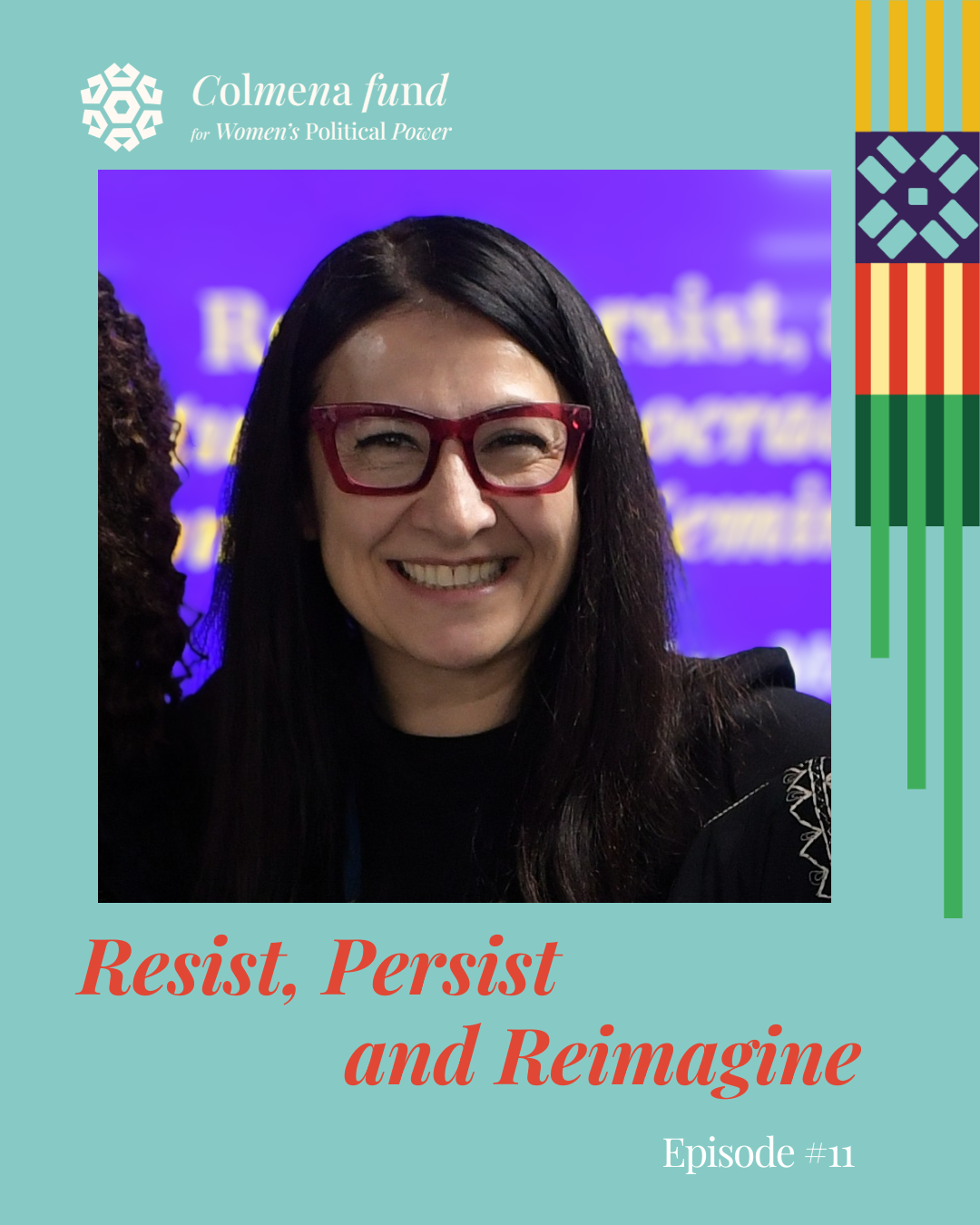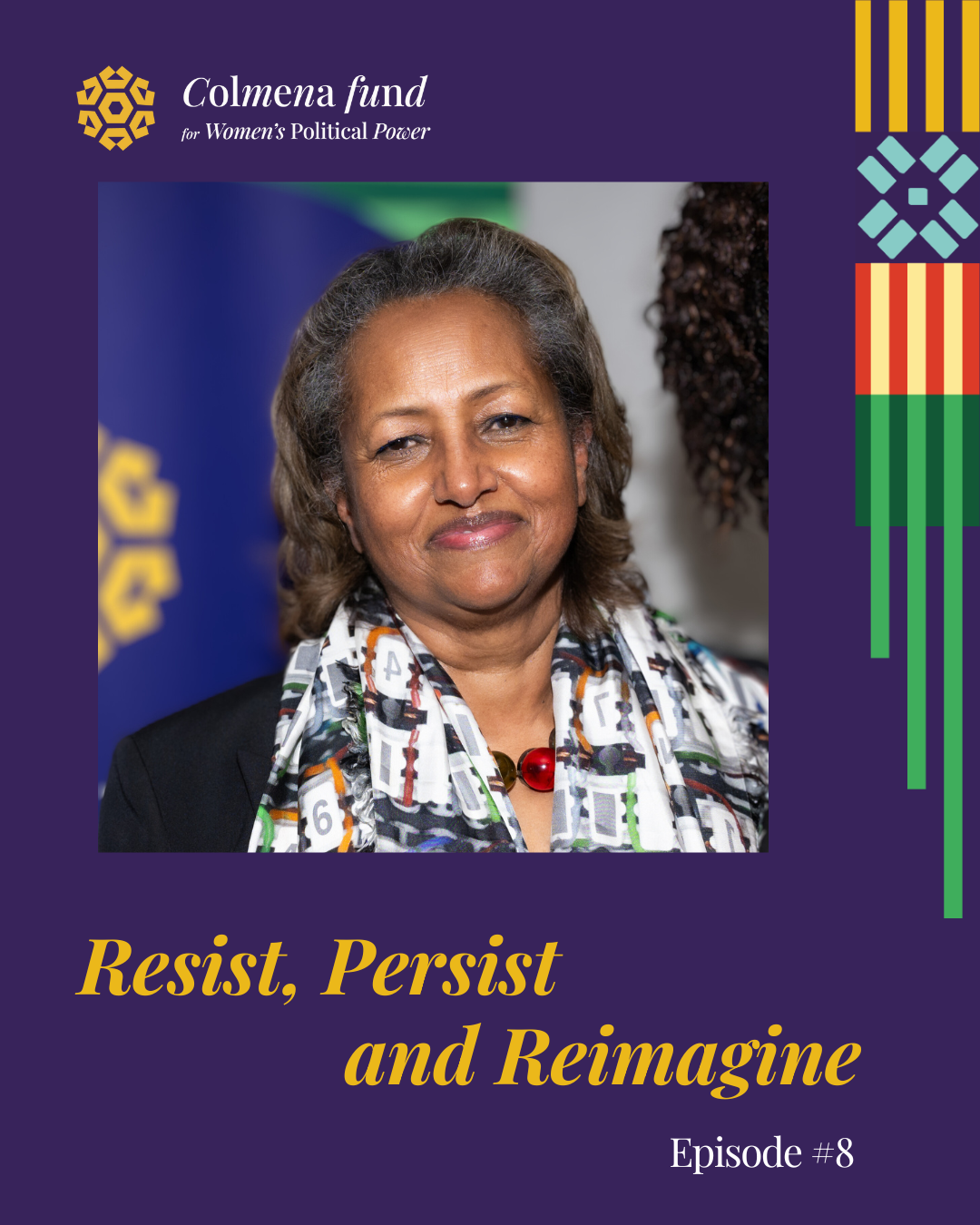
For Hibaaq Osman, founder and CEO of Karama, democracy must be built from the ground up. Based in Egypt and active across 13 countries from Libya to Yemen, Karama is a regional movement rooted in the lived realities of women. As Hibaaq shares in Episode 8 of Resist, Persist, and Reimagine, a podcast series by Colmena Fund, democracy cannot be imported or exported. It must be lived, practiced, and redefined by the communities it’s meant to serve.
Karama is, at its core, a movement to end violence in all its forms—physical, political, economic. But it doesn’t stop with resisting. Karama works to build alternatives, analyzing how violence shapes access to health, education, economic opportunity, justice, and culture, and designing strategies to transform those systems. Change, for Hibaaq, starts in the community and grows outward: “Listen to the women, learn from them, support their priorities.”
Drawing from decades of work across Africa and the Middle East, Hibaaq’s message is clear: democracy, justice, and rights only matter if they make sense to people in their daily lives. That means making democracy tangible—access to healthcare, education, safety, and dignity. “Mobilization, understanding, raising awareness, and having control over your life, whether it’s your body or your politics or whatever, the ownership of your land and where you live”.
She challenges the disconnect between citizens and their governments. Politicians are executives paid with taxpayers’ money. “Once they understand that, then they will say: you are working for me. How come I don’t have school in my village? How come I don’t have a clinic in my village? How come I don’t have a law that protects me? (…) So holding these people accountable, that’s what democracy is”.
The path to securing women’s rights, she reminds us, has never been linear: “Five steps forward, twenty steps back”. Authoritarian regimes fear powerful women—because a politically engaged, community-rooted woman “is the nuclear bomb,” she says. And when repression begins, women are the first to be targeted. “If you bring women to their knees, you bring society to its knees”, but feminist movements persist. “Even at the risk of your life, you do what you need to do—because you know it must be better for everyone. And feminists, by the way, women are not working just for women. They’re working for the whole society”.
Hibaaq’s motto says it all: “Democracy without women is hypocrisy”. Not just any women, but those with a feminist agenda, those shaped by and accountable to grassroots movements. Their leadership ensures that institutions respond to people’s real needs.
In moments of crisis, feminist movements provide critical refuge. “Feminist movements and women’s rights movements are what other women could fall back to when they are having a horrible time (…) That is the cushion that women really fall back to”. That’s why building these movements, and sustaining them is essential.
The Colmena Fund is proud to support Karama and leaders like Hibaaq Osman. As she notes, “they take the risk because they believe in you. (…) They give oxygen to all this vision and all these visionaries”. Colmena’s leadership understands these struggles intimately, having lived them. That’s the kind of solidarity that fuels real change.
Hibaaq Osman’s vision is a bold, urgent call: for inclusive democracy, community power, and radical accountability. If democracy is to serve the many—not the few—it must center the voices, priorities, and leadership of women on the frontlines.
🎧 Listen to the full conversation in Episode 8 of Resist, Persist, and Reimagine.