Across the globe, women are redefining politics—often against impossible odds.
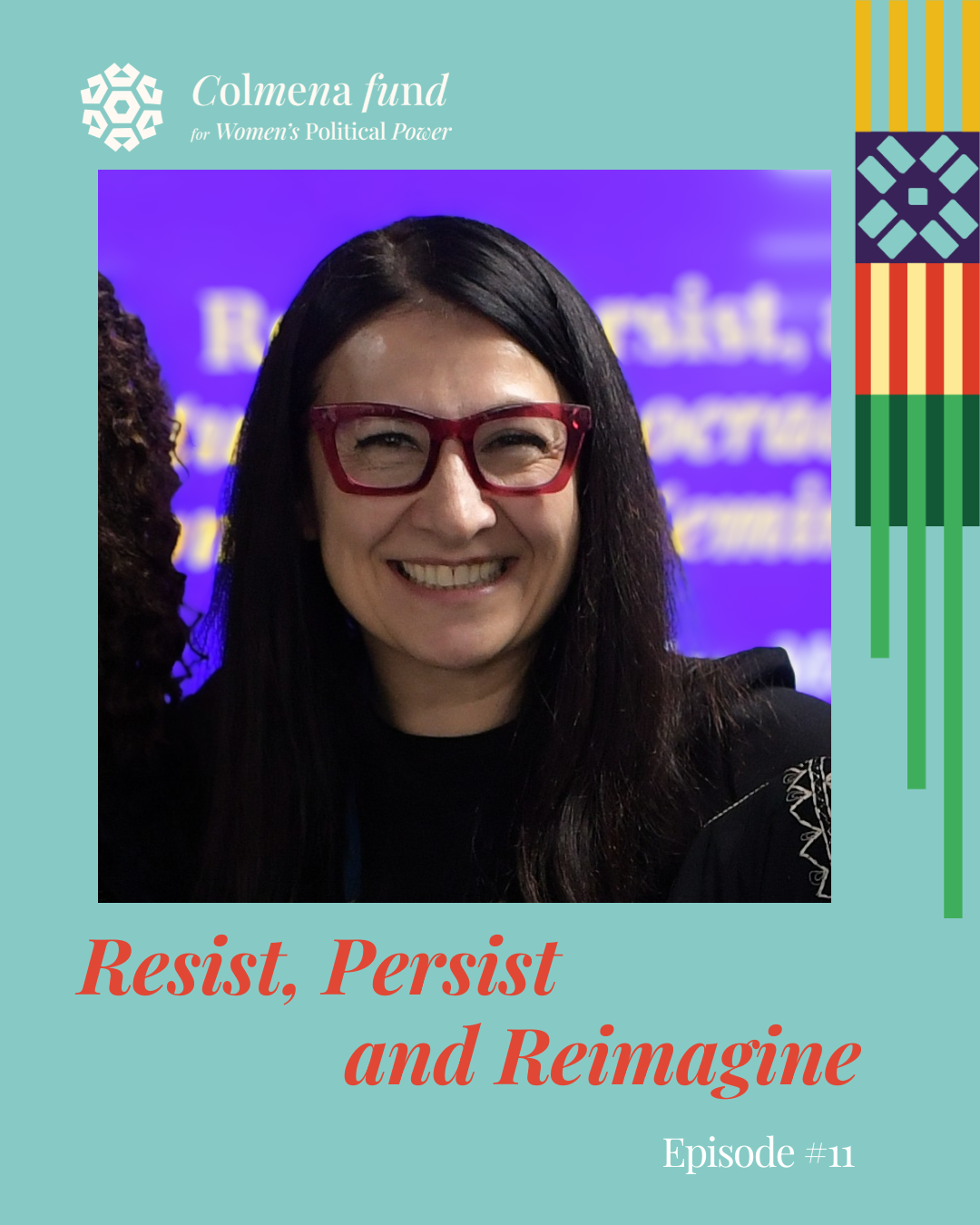
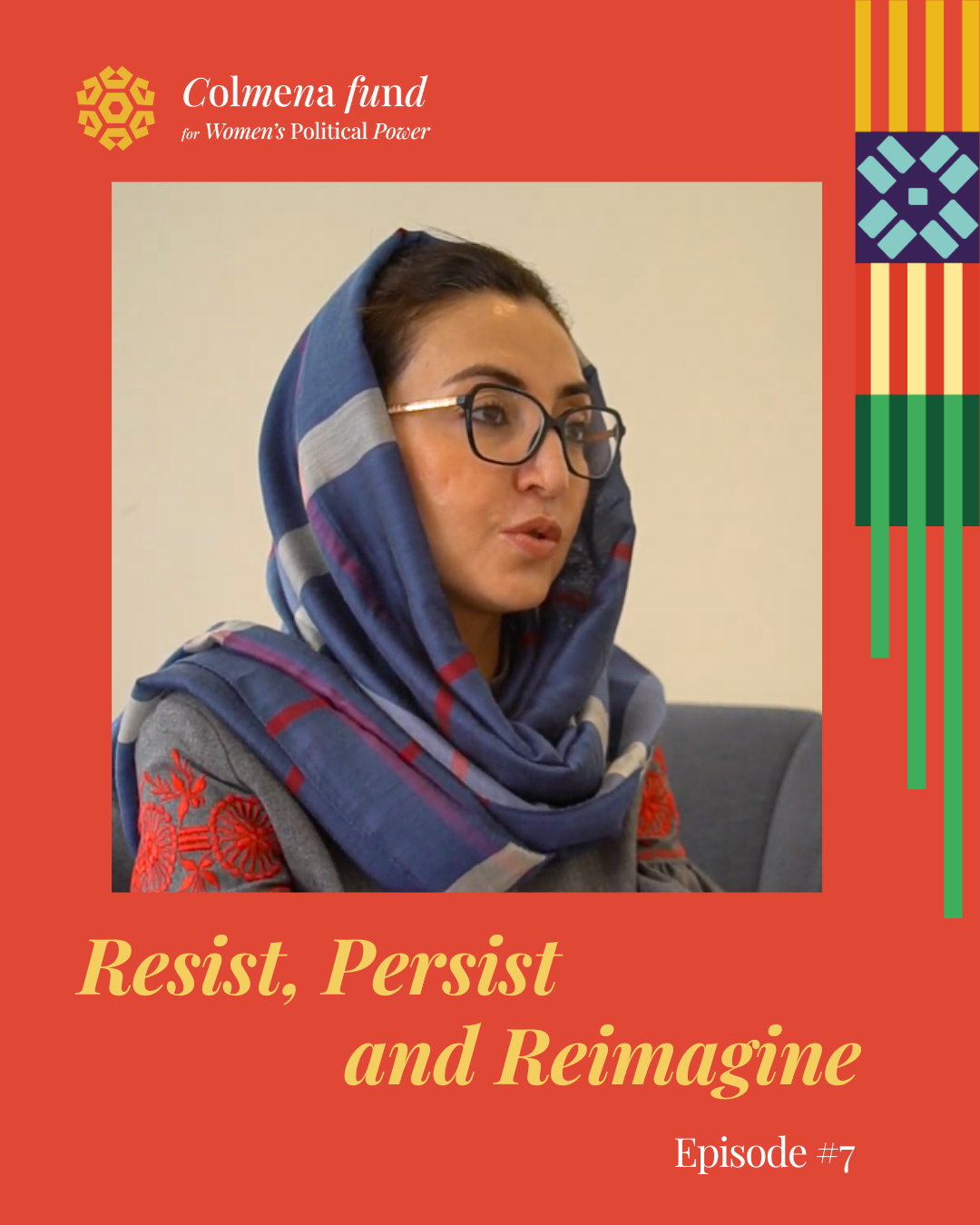
In the latest episode of Resist, Persist and Reimagine, the Colmena Fund spotlights Adela Raz, Director of the Afghanistan Policy Lab. Her leadership journey, shaped by decades of conflict in Afghanistan, reveals both the painful cost of exclusion and the transformative potential of feminist politics. Her insights challenge us to invest in the next generation of women leaders—and to imagine democracies where every voice counts.
Raz never imagined herself entering politics in a conventional sense. Her path, as she puts it, was into the “civil servant space.” Her motivation is rooted in her lived experience as an Afghan woman “born and raised in war and conflict”. She shares how her generation felt a constant push to carve out a space for change, saying: “You always push yourself and try to find that niche and that path that you feel… will bring a change in your country”.
Drawing from her own trajectory, Raz names several persistent and overlapping challenges women face in politics around the world. First, she points to cultural stereotypes—politics is still widely seen as a “masculine and male-dominated area”, which leads many women to feel out of place or discouraged. She also highlights how women often carry a larger share of domestic responsibilities, especially related to caregiving. These dynamics make it even more difficult for women to navigate the complex and time-consuming world of political leadership.
On top of that, Raz calls out deep-seated institutional barriers. Even in modern democratic societies, she explains, there are systems that structurally exclude women from fully participating in political life. These barriers are intensified in more traditional contexts like Afghanistan, where women are currently “formally banned from any type of engagement and work and participation in life”.
But Raz doesn’t only focus on what’s broken—she also speaks to what’s possible. To overcome these challenges, she emphasizes the importance of political participation as a lever for equality. “It’s a space where women’s participation is as vital as men’s for achieving an equal world”, she argues, pointing to evidence that women in politics contribute to more equitable and inclusive governance.
She also underlines the importance of resources. Political engagement requires time, funding, and networks—things women often lack access to. In her words, “the availability of resources would be extremely helpful”. Raz stresses that any serious effort to support women’s leadership must include work at the policy level—“working with governments, administrations, advocating for policy changes”—as well as proactive strategies to encourage more women to run for office.
Critically, she calls for deeper engagement with the younger generation. Raz worries that younger women today may feel more disconnected from politics than previous generations, which could threaten future progress. “We need to creatively reach out to the younger generation and younger women”, she urges, highlighting the importance of mentorship, visibility, and inspiration.
Despite the deeply repressive situation in Afghanistan, Raz holds on to hope. She describes the current moment as “dark”, acknowledging that the expectation of women’s participation in political life is “almost non-existent”. Yet she firmly believes that this is not Afghanistan’s true reality. “There will be a day and there will be a change”, she says. What matters now is preparation: ensuring that when the time comes, there are strong, capable, and prominent women—especially younger ones—ready to lead.
Raz also sees promise on the global stage. She speaks of a “positive pace” among younger generations who are more connected and driven than ever before. In particular, she sees technology as both a challenge and a powerful tool. “Technology is a great new space”, she states, encouraging more women to “get into this space and really champion it” as a means of building community, visibility, and political impact.
Finally, she turns to the role of philanthropy and civil society. Support for women’s political leadership is “needed more than ever”. But as resources shrink and attention shifts elsewhere, many efforts remain underfunded and invisible. Raz makes a clear appeal to funders and institutions: “We have to create more spotlight for the work you’re doing and more resources available to you”.
She highlights the critical importance of grassroots organizations, who are “pushing the button for participation, enthusiasm, and the type of resources that’s needed”. These actors, she says, are laying the groundwork for a future where dignity, human rights, and freedom are at the core of democracy.
For Adela Raz, the idea of democracy is not abstract—it’s deeply personal. While Afghanistan had only “a very small glimpse of it” during the 20 years before the Taliban’s return, she rejects the idea that Afghans turned away from democratic values. Rather, she calls it what it was: “a political failure”.
Democracy, she remarks, is about having your political voice “fairly counted, effectively counted, with your political choice respected”. And even in the face of repression, she believes Afghanistan will come back to it—this time, with greater clarity and dignity.
🎧 Listen to Episode 7 of Resist, Persist and Reimagine to hear Adela Raz’s full story—and join the Colmena Fund in supporting the leaders building democracy around the world.