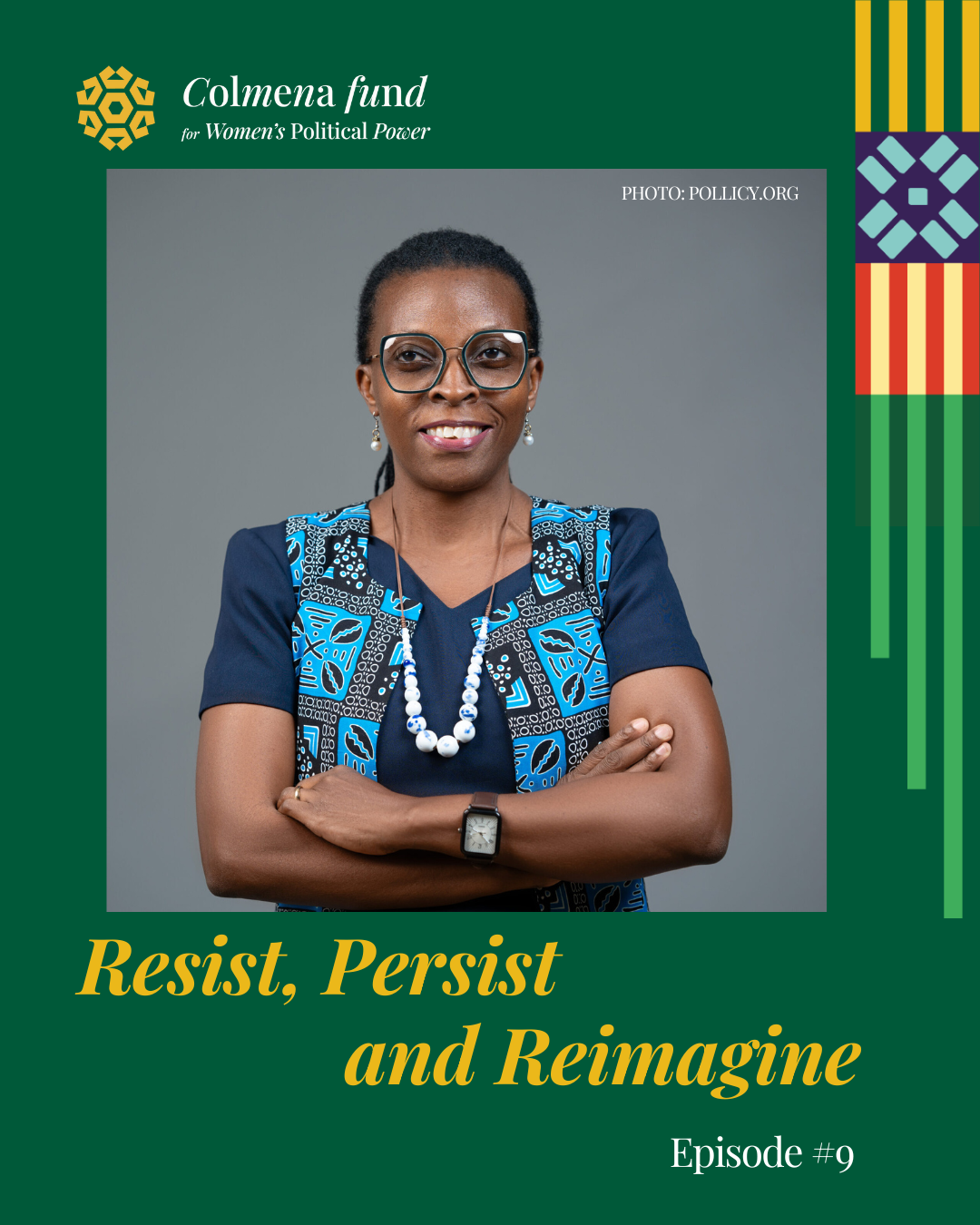
Epsy Campbell Barr is one of the most prominent afropolitical leaders in the region and part of the Colmena Fund’s Steering Committee. Her career includes a historic milestone: she is the first Afro-descendant woman to hold the Vice Presidency of Costa Rica (2018–2022)—making her the first women Vice President of the Americas, a distinction she now shares with Kamala Harris and Francia Márquez. She is also the founder of the Global Coalition Against Systemic Racism and a key figure in building networks of Afro-descendant women in politics.
She identifies herself as an Afro-descendant Costa Rican woman. She rejects the term “minority,” considering herself part of “historically marginalized and excluded groups, not only in Costa Rica but throughout this part of the continent. In other words, groups that have historically lacked power”.
Her path to activism began at home: “I became an activist at home. I’m one of seven children of my mother and father, and we had to learn to stand up for ourselves in a society that constantly reinforced the idea that our racial identity was a barrier”. This family experience led her to affirm her identity and promote equality from the private sphere. She later became involved in social organizations and student movements.
Her entry into formal politics occurred at the beginning of this century, when a new party with a strong commitment to human rights and women’s rights invited her to be part of their list of candidates for Congress, adopting gender parity. “I understood that… politics was a good space to bring about the transformations that society needed”, Campbell explained.
Despite the fact that over 134 million people identify as Afro-descendant in Latin America and the Caribbean—1 in every 4 people in the region—they face systemic discrimination and inequalities. In Costa Rica, for example, Afro-descendant people could not vote until 1949.
For Epsy Campbell, the main obstacles for Afro-descendant people are linked to the understanding of what it means to be a Latin American citizen. She states that these are “structural obstacles within political parties and power structures”. She describes an institutional system that “continues to preserve the logic of social, economic, and political stratification inherited from colonialism. One that places certain people, Black, Afro-descendant, African people, at the very bottom of that power structure, making access to rights feel like a distant possibility”.
Campbell points out the disproportionately low political representation in Latin America and the Caribbean, even in countries with large Afro-descendant populations like Brazil. The distribution of power remains part of a structure where “we’re still debating who gets to be considered a citizen. Worse yet, we’re still debating the very humanity of certain people”.
Campbell emphasizes the need for movements to build coalitions. She highlights the example of Brazil, where Black women have fully integrated LGBTQ+ agendas into their political work: “Black women understand that gender and sexual identities are simply part of being human. There’s nothing extraordinary about it”.
Campbell states that the region is comprised of “incomplete democracies” where the majority of the population is excluded. The central debate is about “recognizing ourselves as we are and talking about the possibility of a new social contract— One that guarantees all rights, starting from that recognition”. This new social pact must guarantee an equally sized seat for everyone and make everyone feel truly represented.
She firmly believes that “Ending racism won’t be possible unless we also end sexism, homophobia, and discrimination based on disability” and other forms of discrimination. Therefore, alliances between movements seeking transformation and a new understanding of power and social agreement are essential.
To support these movements and the women who are transforming reality in the Global South, financial backing and community building are fundamental. “Philanthropy is fundamental. It allows us to support and uplift movements and organizations that are creating real change and need financial backing”, she states.
In this sense, the Colmena Fund has achieved something remarkable by supporting women driving political transformation in the Global South, recognizing their diverse identities and realities, even in conflict zones. “It’s the first fund to directly finance the promotion of women’s political participation in the Global South— To drive the transformation toward justice, democracy, and rights that we urgently need”.
Despite the ongoing crises facing democracies, Epsy Campbell recognizes reality but chooses hope. “We must be prisoners of hope,” she says, quoting Desmond Tutu.
Campbell believes that the crisis will force democracy to re-examine its fundamental principles: “There is no democracy without parity. There is no democracy with racism and the exclusion of historically marginalized groups. There is no democracy with transphobia, homophobia, or lesbophobia”. All these movements demanding rights will come together, as it is the only way to reach this “new moment—this new social contract”.
She describes the current moment as a powerful process, comparable to childbirth. Just when it seems most difficult, a new generation and a new democracy are being born. Campbell calls upon the “generation of light” to help give birth to that new generation, to that new democracy “with representation, without discrimination”, to that new social contract that guarantees rights for all people.